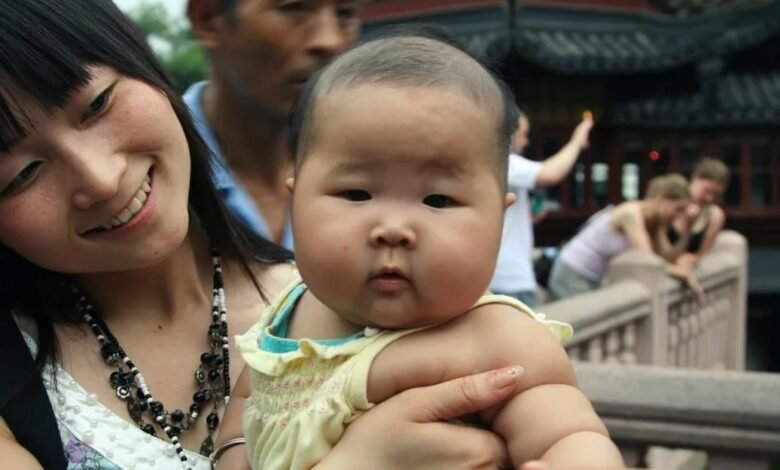
China has announced that it will relax its long-standing family planning rules by allowing all couples to have two children, ending decades of the strict one-child policy that contributed to an ageing population and a declining workforce.
This marks a major policy shift, following a partial relaxation in 2013 that permitted some families to have a second child under specific conditions.
The new policy was revealed at the end of a key government meeting in Beijing, focused on shaping the nation’s economic direction for the next five years. According to state media outlet Xinhua, the decision aims to better balance population growth and respond to the challenges posed by an ageing society.

Introduced in 1980, the one-child policy was originally promoted as essential to China’s economic rise. It was heavily enforced through fines, strict monitoring, and, in many cases, forced abortions—leading to years of emotional trauma for affected families.
Today, however, China faces new demographic issues: a rapidly ageing population, a shrinking labour force, and a significant gender imbalance. While human rights groups welcomed the easing of restrictions, they emphasised that reproductive freedom is still limited as long as population quotas and surveillance systems remain. Maya Wang of Human Rights Watch noted that the move is driven more by economic pressures than by respect for human rights.
Wang Feng, a prominent scholar of China’s demographic trends, described the policy change as “historic,” though he cautioned that it would not reverse the country’s ageing problem. Still, he noted that it would significantly reshape the lives of many young families.