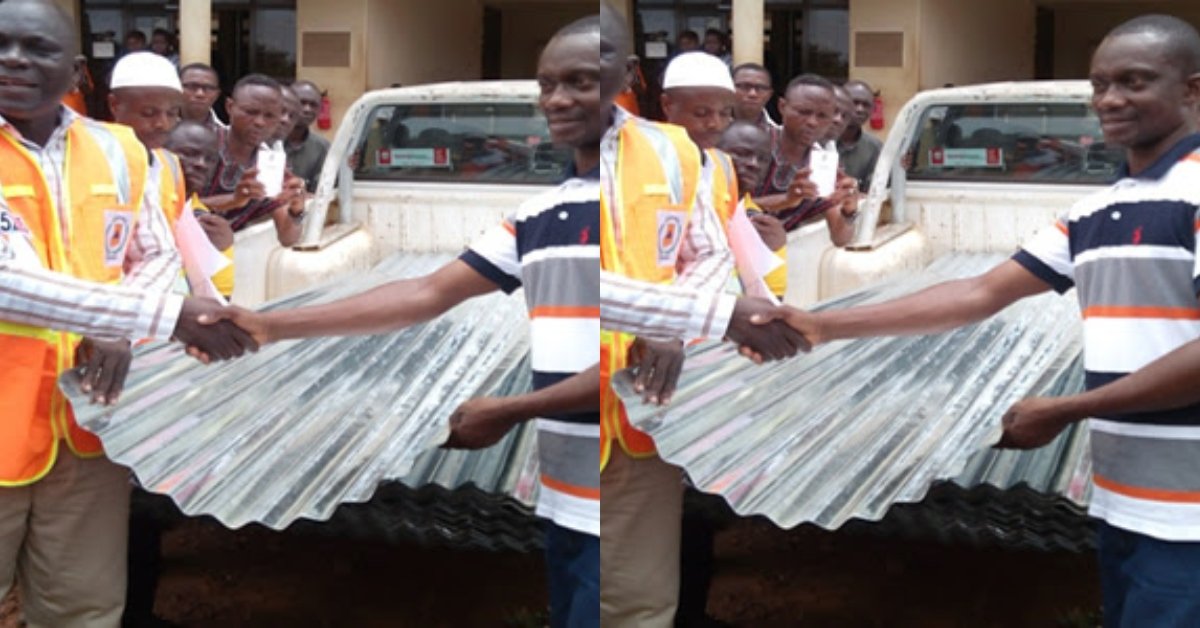
A group of farmers in the Techiman Municipality, Bono East Region, has been engaged in a sensitization program under the Research for Development and Innovation Agricultural Learning (ReDIAL) Project, aimed at promoting soil fertility and organic farming practices.
The one-day session focused on educating farmers about the importance of soil nutrition management as a key factor in producing healthy, high-quality food and ensuring food safety. The farmers were also informed about the benefits of protecting natural soil organisms, such as worms, ants, and millipedes, whose presence contributes significantly to soil fertility.
The ReDIAL project, funded by the European Union, is being implemented nationwide by three institutions dedicated to natural resource sustainability. It involves the Faculty of Renewable Natural Resources at the Kwame Nkrumah University of Science and Technology (KNUST) and targets six regions, including Techiman.

Speaking to the farmers, Professor Boateng Kyereh, Dean of the Faculty of Renewable Natural Resources, explained that the project serves as a platform for farmers to voice their concerns and challenges. He emphasized that the initiative encourages a shift away from the heavy use of inorganic fertilizers in favor of organic manure to restore and maintain soil fertility for better crop production.
Prof. Kyereh also discussed sustainable agricultural practices such as crop rotation, land fallowing, and mixed farming, which are essential for maintaining healthy soils. He warned against the destructive practice of farm burning, which depletes vital nutrients in the soil. He highlighted that burning farm waste, which could otherwise decay and enrich the soil, further exacerbates soil infertility.
He urged farmers to prioritize soil health by avoiding environmentally harmful practices like bush burning and excessive use of agro-chemicals.
Regarding the sustainability of the ReDIAL project, Prof. Emmanuel Acheampong, the project’s Coordinator at KNUST, stressed the importance of multi-stakeholder involvement. He emphasized that the project’s long-term success depends on farmers and their partners taking ownership of the initiative. Additionally, he noted that the project aligns with and supports the government’s Planting for Food and Jobs (PfFJs) program to improve agricultural productivity.
Nana Kwaw Adams, Executive Director of the Abrono Organic Farming Project (AbofaP) in Forikrom, Techiman, praised the ReDIAL project for its focus on organic manure, which he described as a vital tool for enhancing soil health and producing nutritious food. He also called on the government and its partners to promote large-scale organic manure production to reduce reliance on imported inorganic fertilizers, which do not fully meet the standards for producing natural, healthy food.